Table Of Contents
Circadian misalignment – not living in line with your body’s chronotype, or natural rhythm – has been linked to a wide array of health consequences. Most Australians, though, remain unaware of what chronotypes (or circadian rhythms) are. If they have heard of chronotypes, they’re often confused about their reliability, unsure what’s fiction and what’s science-based fact.
This report presents data collected from 1,593 questionnaire participants, both to interrogate popular ideas about chronotypes and provide actionable takeaways.
Introduction
Your body has its own rhythm – an internal clock that tells you when to sleep, when to eat, and when to move. It’s known as your circadian rhythm, and it influences every aspect of your life. Your circadian rhythm is approximately 24.18 hours long. That means, if you were isolated in a dark room, your body would gradually become ‘de-synced’ with the outside world.
Luckily, nature developed a solution to help keep our circadian rhythms on track. ‘Zeitgebers’ are factors that keep our bodies aligned with the day–night cycle. They include:
- light
- temperature
- meal timing
- movement
- social activity.
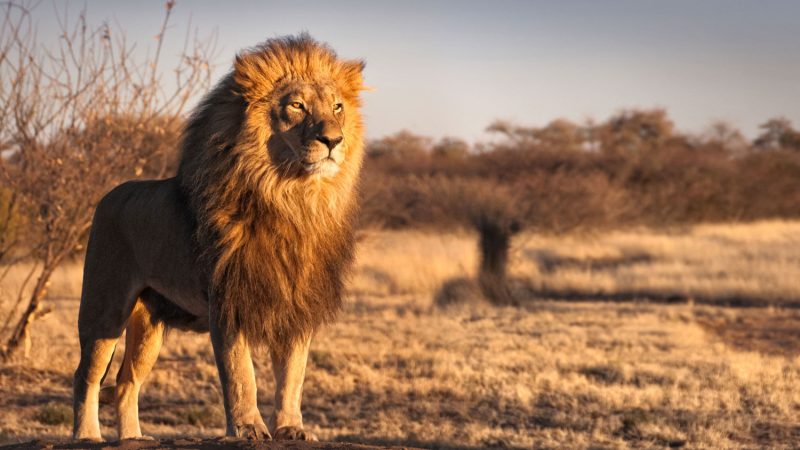
Even with zeitgebers, though, not everyone’s circadian rhythms run on the same time. Some people like to wake up and go to bed early. Others are ‘night owls’ – more comfortable staying up late and waking when the sun is high. That preference is known as your chronotype, and it’s determined by a combination of genetic and environmental influences. You’re either:
Although chronotypes have been studied extensively for decades, no recent, large-scale studies with Australian samples have been conducted. This report aims to explore how popular ideas about chronotypes map over to the general Australian population – and provide clear takeaways applicable to everyday life.
Method
From June 2025 to June 2026, we collected responses to an online questionnaire about chronotypes. The questionnaire comprises a proprietary series of questions based on peer-reviewed quizzes like the Morningness-Eveningness Questionnaire (MEQ) and the Munich Chronotype Questionnaire (MCTQ). It was architected to mitigate biases such as:
- culture-specific preferences (chronotype is heavily influenced by genetics)
- lifestyle choices (work, school, and other forms of social jet lag can mask your true chronotype)
- assumptions of causation (for example, the myth that being sleep-deprived means you are a Wolf; in reality, Wolves are simply more likely to be sleep-deprived due to social jet lag).
Participants found the quiz through online search mechanisms like search engines and AI chatbots. After data cleaning, 1,593 responses remained for analysis.
Participant Demographics
The questionnaire participants were relatively diverse, skewing female while falling fairly evenly across age lines.
| Female | Male | Other | |
| Teens | 5.27% | 4.7% | 0% |
| 20s | 10.23% | 6.03% | 0.37% |
| 30s | 11.48% | 5.78% | 0.19% |
| 40s | 10.36% | 4.96% | 0.06% |
| 50s | 12.49% | 4.52% | 0.13% |
| 60s | 10.55% | 3.33% | 0% |
| 70s | 5.71% | 2.2% | 0% |
| 80s | 0.94% | 0.5% | 0% |
| 90s | 0.06% | 0.06% | 0% |
Numbers are rounded to the second decimal place.
Findings
Chronotypes Are More Evenly Distributed Than Believed
Traditionally, scientists have estimated that N-types (Bears) make up around 60% of the population, with M-types (Lions) and E-types (Wolves) comprising the remainder [1]. Those numbers have been derived from the peer-reviewed questionnaires we mentioned earlier – the MEQ and MCTQ.
Our questionnaire, however, found quite different ratios. Across all age groups and genders, just 41.3% of participants were classified as Bears, with another 35.2% as Lions and the remaining 23.5% as Wolves.
Chronotype Distribution
| Lion | 20.1% | |
| Bear | 56.0% | |
| Wolf | 23.95% |
So why is there such a discrepancy between our results and others? The most obvious answer is that, despite drawing inspiration from the MEQ and MCTQ, our questionnaire is designed quite differently. It blends general, easy-to-answer hypotheticals (like the MEQ) with behavioural questions (like the MCTQ). We also deliberately excluded questions that are primarily caused by social factors or sleep health rather than chronotype – while still acknowledging that fully separating the 3 is almost impossible.
Our sample’s psychological traits could also play a role. In most chronotype studies, samples skew male, are professionally homogenous (office workers, for example, or university students), and are actively recruited. By contrast, our sample is completely self-selected. The only known unifying trait is an interest in chronotypes and wellbeing. That interest may be driven by a self-perception of extremity – people who fall outside the median are potentially more likely to be motivated to investigate their health, which, in turn, appears in the data as higher percentages of Lions and Wolves.
Wolves Are the Least Common Chronotype
In line with most chronotype literature, our findings confirmed that Wolves are the least common chronotype – at least, at a population level. When sample participants were segmented by age, the results were more nuanced.
Twenty-three per cent of teenagers, for example, were identified as Wolves, with just 20% being classed as Lions. (We’ll talk more about why later in this report.) That number rose dramatically for participants in their 20s, with nearly 38% being Wolves – more than any other chronotype. From 30 onwards, though, the numbers of Wolves started to normalise, averaging out to 20.2% across the remaining age groups (the exact percentage found in the French study we mentioned earlier).
Chronotype Distribution by Age
Women Are More Likely to Be Wolves
One of our most interesting findings: overall, women are around 12% more likely to be Wolves than men. From their 20s onwards, women overtake men as the leading Wolf gender, with women in their 50s almost twice as likely to be Wolves than men. Men, on the other hand, are marginally more likely to be Lions (4.4%) and Bears (2.3%).
Wolves by Age Group
Exactly why isn’t clear. Job types, social preferences, household roles, and biology could all feasibly influence that outcome – as could sleep problems. For example, 23% of women reported being ‘extremely tired’ upon waking (compared to just 17% of men). Women, on average, have subjectively less satisfying sleep than men, which could lead to greater sleep need and more time in bed [3].
Takeaways for Women
If you are a Wolf, embrace it. You don’t need to follow the same routine as your partner, family or friends – especially when it comes to early exercise. You’re more likely to perform at your best later in the day (5 pm to 7 pm).
At the same time, be wary of a false positive. Poor quality sleep could tilt you towards Wolf-like behaviours – even if your genetics point towards a different chronotype. If you feel like the sleep you do get isn’t particularly satisfying, try improving things like your movement, nutrition, and sleep surface, then retest your chronotype.
Don’t know your chronotype?
Teenagers Sleep Late
Unsurprisingly, our results confirm what we already knew from decades of study: that teenagers are biologically wired to sleep and wake later. Just 20.1% of teenagers are Lions, with 56% being Bears and 23.9% being Wolves.
Teen Chronotype Distribution
| Lion | 20.1% | |
| Bear | 56.0% | |
| Wolf | 23.95% |
Realistically, the ‘true’ number of teenage Wolves is probably higher. Early school start times act as a zeitgeber, masking their biological tendencies. That’s probably why teenagers also have the highest percentage of Bears of any age group – Wolves are forced, by schedule and parental discipline, to rise and sleep earlier than they might otherwise naturally.
Unfortunately, going against your body’s rhythm has consequences. Almost 24% of teenage participants reported being ‘extremely tired’ when they wake up, which is a sign of chronic sleep deprivation. Poor sleep negatively impacts almost every aspect of physical and mental health, including the ability to learn new information and skills – the very thing that teenagers are being woken up early to do.
Takeaways for Parents
Let your teenagers sleep in for as long as possible. They’ll be physically healthier, be more emotionally regulated, and do better at school. If you can, schedule extra-curricular activities after school, not before.
Circadian Rhythms Move Forward With Age
Our findings also confirmed another well-documented observation: that our circadian rhythms shift forward as we get older. Teenagers had the lowest percentage of Lions at just 20.13%, with that number increasing decade over decade.
Lion Percentage by Age Group
Takeaways for People With Older Relatives
Don’t schedule family gatherings and other shared events late at night. If your family members are Lions – and there’s a good chance they are – their energy levels will start dropping off from around 4:30 to 5 pm. So, if you do want to host a dinner, try to eat earlier and be aware that older people may want to leave before you’re ready to finish.
Lions May Not Be the Healthiest Chronotype
Many people believe that Lions are the ‘healthiest’ chronotype – maybe because we think of getting up early as being linked to behaviours like regular exercise. That perception, though, may not be accurate.
Based on physiological data collected from participants, we found that all 3 chronotypes had virtually identical numbers of participants at a ‘healthy’ body mass index (42.32%, 43.31%, and 42.5% for Lions, Bears and Wolves respectively). Lions and Bears were fairly similar across the other 3 BMI categories too, although Wolves displayed noticeable differences. There were over 31% more obese Wolves than Lions, for example, and over 113% more underweight Wolves than Lions. That correlates with existing scientific research, which shows that eveningness is associated with worse physical and mental health due to social jet lag [4, 5].
Chronotype Distribution by BMI
Takeaways for Everyone
Don’t assume that you’re ‘healthy’ or ‘unhealthy’ because you’re a certain chronotype. Following best practices – like getting enough high-quality sleep, eating healthily, and moving often – is the single best way to support your wellbeing. If your social schedule does clash with your chronotype, try adjusting it. Your body (and your loved ones) will thank you.
The information contained in this article is general information only. It should not be construed or used as medical or healthcare advice. For personalised advice, book a consultation with a qualified and registered medical or allied healthcare professional.
References
[1] Adan, A., Archer, S. N., Hidalgo, M. P., Milia, L. D., Natale, V., & Randler, C. (2012). Circadian Typology: A Comprehensive Review. Chronobiology International, 29(9), 1153–1175. DOI: 10.3109/07420528.2012.719971
[2] Taillard, J., Philip, P., Chastang, J.-F., & Bioulac, B. (2004). Validation of Horne and Ostberg Morningness-Eveningness Questionnaire in a Middle-Aged Population of French Workers. Journal of Biological Rhythms, 19(1), 76–86. DOI: 10.1177/0748730403259849
[3] Krishnan, V., & Collop, N. A. (2006). Gender differences in sleep disorders. Current Opinion in Pulmonary Medicine, 12(6), 383–389. DOI: 10.1097/01.mcp.0000245705.69440.6a
[4] Lok, R., & Zeitzer, J. M. (2025). Chronotype and Mental Health: Are Late Sleepers More Vulnerable? Current Psychiatry Reports, 27(10), 544–552. DOI: 10.1007/s11920-025-01626-4
[5] Frisk, M. K., Hedner, J., Grote, L., Ekblom, O., Arvidsson, D., Bergström, G., Börjesson, M., & Zou, D. (2022). Eveningness is associated with sedentary behavior and increased 10-year risk of cardiovascular disease: the SCAPIS pilot cohort. Scientific Reports, 12. DOI: 10.1038/s41598-022-12267-5