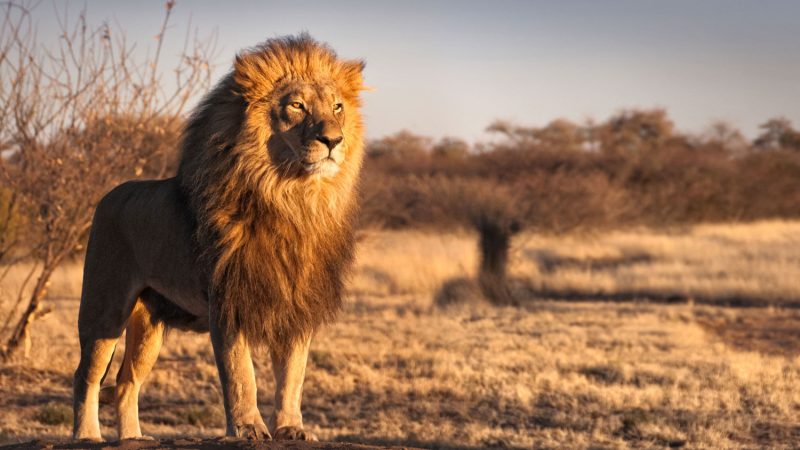
If you’re a Wolf, this is your guide to living in line with your body’s natural rhythm.
Not sure what your chronotype is?


What Is the Wolf Chronotype?
Time doesn’t just run on your phone or watch. Your body has an internal clock as well – your circadian rhythm. Even if you lived in total darkness without any technology, your body would still have an internal sense of time. You would still feel sleepy at roughly the same time you do now.
Not everyone’s internal clocks are the same, though. Each of us is genetically predisposed to sleep and wake at certain times [2]. For example, around 28% of Australians wake up early and go to sleep early – a group known as Lions, morning larks, or M-types [3]. Around 52% are Bears or N-types, whose internal clocks run around one to 2 hours behind Lions’.
Then, of course, there’s the nocturnal pack: the Wolves. Also known as night owls or E-types, you and your fellow canines wake and sleep around 2 to 3 hours before Lions do. You likely wake up between 8 and 8:30 am, feel most energised between 5 and 7 pm, and go to bed between 11:30 pm and 12 am.
Olivia on Wolves
Here’s what Olivia Arrezolo, Australia’s leading sleep expert and author of Bear, Lion or Wolf, says about Wolves.
If you’re a Wolf, you’re the night owl of the chronotype world. Wolves have two sides – you can be sociable, fun-loving and invigorating, but you’re also prone to sleep deprivation, which can leave you feeling stressed and anxious.
[Y]ou’re a creative soul who shines when working on a project you’re truly passionate about; however, when bored, you’re easily distracted and may procrastinate, At home, you squeeze the last bit out of every day, even if it means burning the candle at both ends. Socially, you are connected to many circles, but when you’re in an intimate relationship, you may withdraw and spend most, if not all, of your time with your partner.
Can Your Chronotype Change?
Yes, our chronotypes can change across our lifespans. As we age, our internal clocks move forward, so we tend to rise and sleep earlier than we did when we were younger. That means you might change from a Wolf to a Bear as you age – or just become a slightly earlier-rising Wolf.
Keep in mind that sleep behaviour and chronotype are different. If you kept going to bed at 5 pm and waking up at 2 am, for example, your body would become used to that schedule. But your energy levels and sleep quality would be worse than if you’d aligned your lifestyle with your circadian rhythm.
Your Energy Levels as a Wolf
Use the following science-based schedule to align your lifestyle with your chronotype.

8:00 am: Wake Up
Wolves typically wake up around 8:00 am. That time can vary between people, though, and might shift by up to an hour either way between seasons.
Go outside and get sunlight in your eyes within 30 minutes of waking for at least 5 minutes. Light is our most important zeitgeber (‘time-giver’), and being exposed to early morning sunlight can help certain cells in our eyes reset or ‘entrain’ our internal clocks.
It’s also a good idea to start your day with a big glass of water. (If you’ve slept through the night, your body hasn’t received any fluids for over 8 hours.) Drinking helps us feel full, so have your water before your breakfast.
Hydrated? It’s time for breakfast. Try consuming a balanced meal that includes protein, fats and carbs. If you like exercising in the morning, eating afterwards is completely fine.
One cup (220 grams) of rolled oats cooked in hot water, for example, has around 30 grams of protein, 20 grams of fat, and 120 grams of carbs – a quick, affordable, healthy meal that’s vegan, gluten-free and dairy-free. You can spice things up by:
- using dairy or non-dairy milk instead of water
- creating Bircher muesli, making porridge, or blending up oats in a smoothie
- adding extras like nuts, seeds, fruit, honey and yoghurt.
Wolf Morning Routine
- Wake up at ~8:00 am.
- View sunlight within 30 minutes of waking.
- Drink a big glass of water.
- Eat a balanced breakfast that includes protein, fats and carbs.
10:45 am: Rest
Unlike Lions and Bears, you’re a creature of the night. That means you’ll feel less energised in the morning, even after a full night of sleep. Your ‘before-lunch slump’ will hit from 10 to 11:30 am, with your energy levels reaching their lowest at around 10:45 am.
You probably won’t feel like a nap, so try drinking a healthy beverage like filtered water, green tea, matcha, or black coffee instead. A light snack (like these) can also be a good way to perk yourself up.
5:30 pm: Last Coffee
Finish drinking your final coffee by 5:30 pm latest (the earlier, the better) [5]. Some studies even suggest that your last coffee should be around 9 hours – that’s 2:30 pm – before bed [6].
Caffeine has a half-life of 4 to 5 hours in most people. That means, if you have an espresso shot with 75 grams of caffeine at 8 pm, you’ll still have 37.5 grams of caffeine in your blood by 12:00 am. Even relatively small amounts of caffeine can reduce your sleep efficiency and your deep sleep [6].
6 pm: Peak Energy
When the moon rises, so do your energy levels. You’ll feel most alert from 5 pm to 7 pm, peaking at around 6 pm. This is the time of day when your body and brain are at their best, making it the perfect window for challenging activities – things like housework, exercise, difficult conversation, and stressful appointments.
9:30 pm: Last Meal
The later we eat, the worse our sleep is likely to be [7]. Meals are a zeitgeber that tells our bodies ‘it’s time to be awake’. Digesting food also increases our body temperature, which makes it harder for us to sleep well.
Keep your final meal relatively light, finish eating by 9:30 pm, and get a healthy balance of protein, carbs and fats. (Breakfast and lunch should be your biggest meals of the day.)
Don’t go straight for the sugary treats. Instead, try making a smoothie with milk, honey, a banana, and a scoop of casein protein. Milk and bananas both contain tryptophan (an amino acid that supports sleep), honey contains melatonin, and casein is a slow-release protein that helps you feel full while you sleep.
10 pm: Lights Down
Light is one of our biggest zeitgebers. Seeing bright light at night – particularly blue light, the kind emitted by screens – disrupts our circadian rhythm and makes us feel more alert.
To help your body realise it’s nighttime, reduce the use of bright lights as much as possible. Use soft, dim lamps and overheads to illuminate key areas of your home. If you’re using a Kindle or screen-based reader, set it to automatically switch to night/sleep mode at 10 pm.
Eyesight less than great? Buy a pair of blue light glasses as well. The anti-blue-light coating on them can help you reduce circadian disruption without making your home too dark.
10:30 pm: Wind Down
By 10:30 pm, you should feel pleasantly tired. Bring your body back to baseline with a personalised sleep routine. Here are a few tips you can use to build yours.
Things to Try
- See if meditation or mindfulness can help you relax. You can find various free mindfulness exercises here and here. If you prefer a guided experience, apps like Waking Up can be good options.
- Think about trialling an essential oil diffuser. Certain scents, including lavender and chamomile, have been scientifically proven to help us relax [8]. You can get a cheap diffuser from Kmart for as little as $20, but don’t skimp on the oils – you want 100% pure essential oils (no artificial additives).
- It’s better to avoid drinking fluids before bed, but, if you feel dehydrated, try a warm cup of chamomile tea, warm milk with honey, or warm water mixed with an adaptogen like reishi powder. Adding electrolytes to your drink may also make it less likely that you need to visit the bathroom at night.
- Put on relaxing music. ‘Weightless’ by Marconi Union is an example of ‘anti-anxiety’ music – a track specifically developed to help people relax. Many people also find binaural beats and brown noise soothing.
- Have a warm bath or shower. You’ll increase vasodilation, which means your body will lose heat faster. That, in turn, lowers your core body temperature – which helps you feel sleepy. A full-body bath for at least 10 minutes is ideal, but a shorter shower or a foot bath can also work [9].
- If you have a device with a vibration or massage function, turn it on. Many people find whole-body vibration therapy relaxing, and some studies have indicated that it might improve sleep quality [10].
Things to Avoid
- Avoid stimulation. That means no movies, no screen-based games, no social media, and no loud or aggressive music.
- Avoid stress. Don’t think about stressful situations, write hard text, or talk to people who trigger you. Avoid watching the news and doomscrolling (reading news online). Everything can wait until tomorrow – this is your time to prioritise yourself.
- Avoid anything other than light movement. If possible, do activities like dishwashing earlier in the evening.
- Don’t drink alcohol.
- As a Wolf, you might struggle with late-night impulsive behaviours. If you’re having difficulty changing a bad habit, try using tools like TIPP or urge surfing. It’s also a good idea to change or remove triggers from your home – for example, throwing out the alcohol or unhealthy snacks that you just can’t seem to stay away from.
11:30 pm: Sleep
It’s time to give your body the rest it needs. Head into your sleep sanctuary, turn off the lights, and make sure your room is dark and cool.
Movement for Wolf Chronotypes
There’s no evidence that specific types of exercise are good for Wolves. Instead, try to follow these movement basics.
- Do at least 2 to 3 sets of one to 2 resistance training exercises, 2 to 3 times per week, at a moderate intensity. Work with a personal trainer to develop a program that matches your skill level and supports your body’s needs [11].
- Do at least 150 minutes per week of moderate-intensity aerobic exercise [12].
- If you have time, add balance activities like tai chi or yoga to help reduce your risk of falls [11].
Remember: the more you move, the better. Being active is one of the most important things you can do for your physical and mental health – second only to sleep. (And the evidence shows that regular exercise actually improves sleep quality [13].) Aim to move your body for at least 30 minutes a day, even if it’s as simple as a walk down the street.
You’ll probably perform best during your peak energy window, but don’t let that stop you from exercising at other times of day. If possible, though, avoid intense exercise after 7:30 pm [13]. Exercise is a form of stress that activates your sympathetic nervous system. When that activation happens in the 4 hours before bed, it can affect almost every aspect of your sleep [15].
Nutrition for Wolf Chronotypes
There’s no evidence that Wolves should eat specific foods. Many people, though, can benefit from following a balanced eating pattern high in fibre and protein.
- Get 80% of your calories from single-ingredient foods (fruits, vegetables, cereals, meat and fish, eggs, dairy, nuts and seeds).
- Eat at least 1.6 grams of protein per kilogram of body weight per day.
- Consume one to 2 gramsof omega-3 fatty acids per day.
- Get 30 ‘plant points’ per week.
- Consume at least 0.75 grams of fibre per kilogram of bodyweight per day.
Fixing your sleep can help you lose weight, particularly if you’ve reached menopause, so most healthy older adults don’t need to worry about eating too much protein. In fact, it’s much more likely that you’ll be eating too little protein (which can lead to various health problems).
Sleep Surfaces for Wolves
Everyone’s body is different – and different bodies benefit from different sleep surfaces. That means there’s no one ‘right’ kind of mattress for Wolves. On average, though, Wolves tend to have higher BMIs than Bears or Lions. That extra weight can mean you’re more likely to live with lower back and knee problems.
Look for a mattress with a medium-firm surface (7 out of 10) to properly support your body. Coil mattresses – particularly those with micro-coil matrices – are normally better than memory foam. If you regularly experience lower back pain at night, think about complementing your new mattress with an adjustable base that elevates your legs.
It’s also important to find a sleep surface that includes cooling technology. Most of us already know that being hot at night disturbs our sleep – and many different studies agree [16]. Cooling gel layers (particularly those with heat-distributing graphene) are ideal for helping you sleep through warmer summer nights.
Wolves are statistically more likely than other chronotypes to live with sleep problems [17]. That doesn’t mean you have to. Invest in a mattress that supports your sleep. Your body – and your future self – will thank you.
The information contained in this article is general information only. It should not be construed or used as medical or healthcare advice. For personalised advice, book a consultation with a qualified and registered medical or allied healthcare professional.